
COL Auto | Industry Insights
Why parts availability, smarter sourcing and reliable distribution are more important than ever in collision repair.
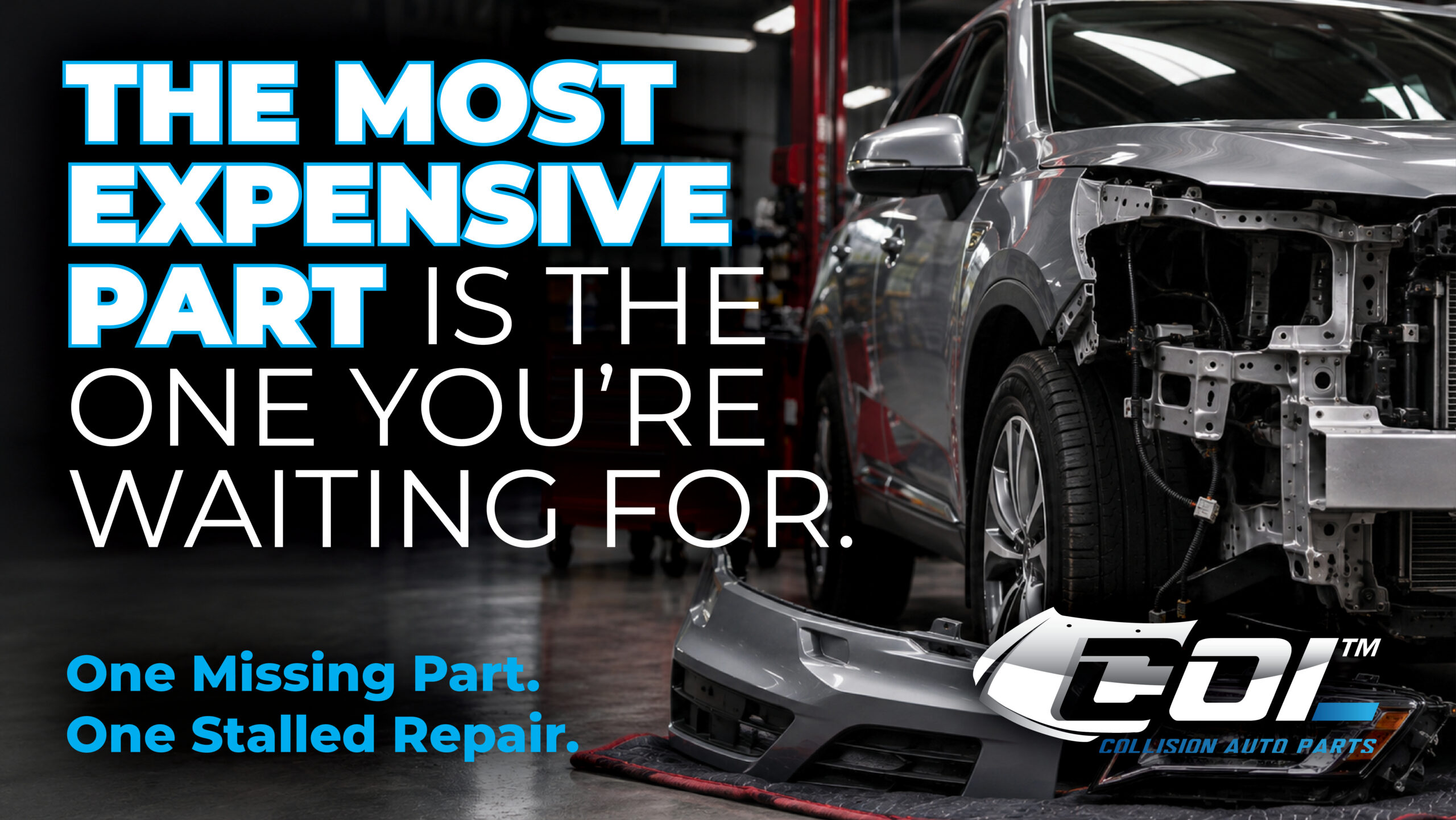
A replacement part doesn't have to be expensive to cost a collision repair shop money.
Sometimes, it just has to be late.
Every collision repair professional knows the frustration. The replacement bumper has arrived. The fender is ready. The headlight is sitting on the parts cart. The technician is prepared to move forward.
But one small component is missing.
Suddenly, an otherwise straightforward repair is delayed, production schedules are disrupted, and the customer is waiting longer to get back on the road.
In an industry already navigating rising repair costs, increasingly complex vehicles and pressure to operate more efficiently, the true cost of a replacement part extends well beyond its purchase price.
One Missing Part. One Stalled Repair.
The Fall 2026 PartsTrader Collision Industry Trends Report provides a compelling illustration of how a single delayed component can impact an entire repair.
In an example featuring nine commonly purchased collision replacement parts, eight components arrive within 2.5 days. The remaining component — a hood hinge — takes 11 days to arrive.
The simple average delivery time across all nine parts is just 2.3 days.
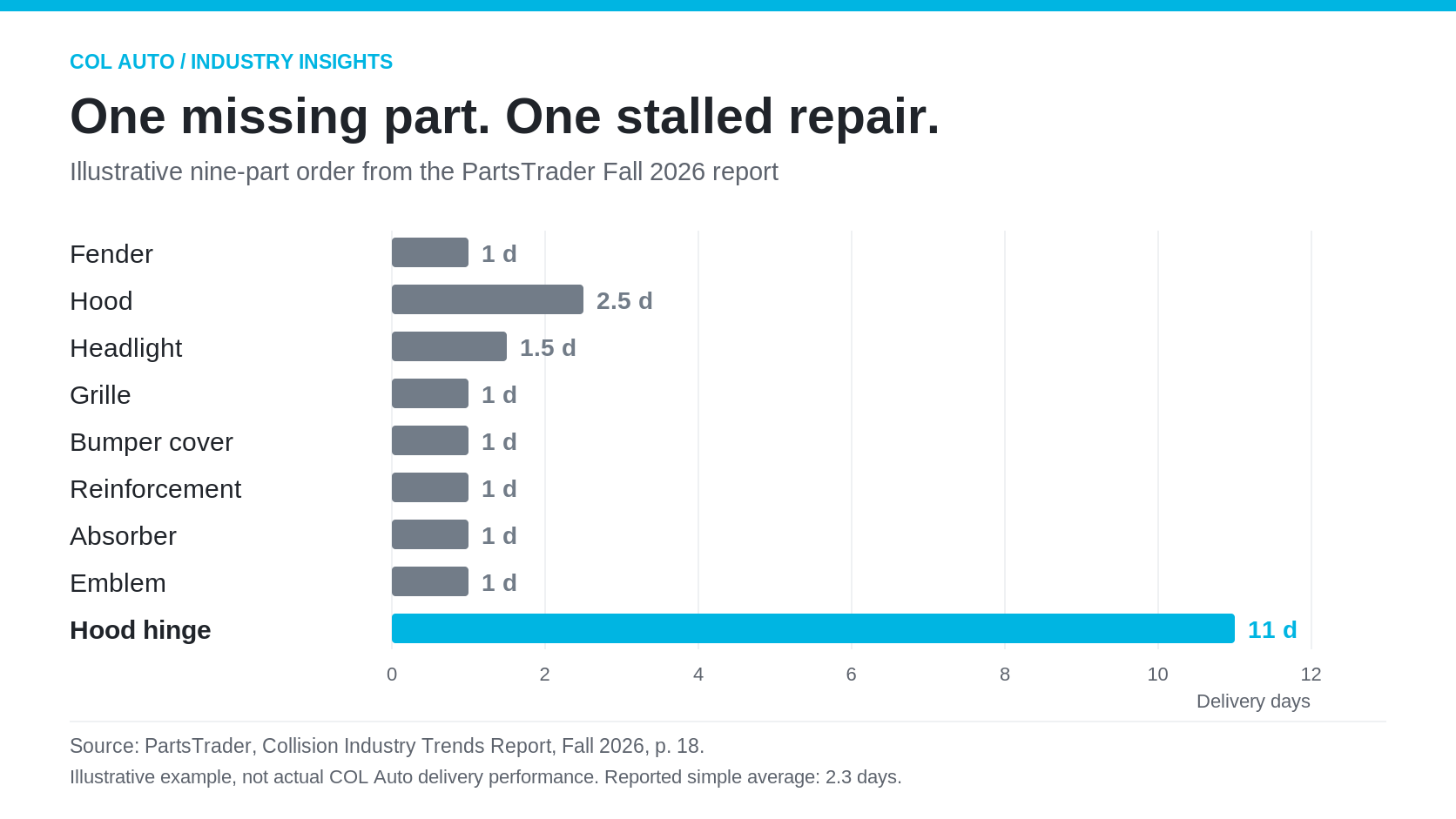
On paper, that sounds like a relatively efficient parts order. But for a repair shop that cannot complete the vehicle without that final component, the average tells a very different story than the actual repair experience.
Eight parts ready. One part missing. One vehicle waiting.
It's a reminder that successful collision repair isn't simply about receiving most of the parts quickly. It's about having all the necessary parts available when they're needed.
The Hidden Cost of Waiting
When a collision repair is delayed, the financial impact can extend throughout the operation.
A missing or backordered component can contribute to:
- Longer vehicle repair cycle times
- Disrupted technician schedules
- Reduced shop capacity and throughput
- Additional vehicle handling and administrative work
- Extended rental vehicle expenses
- Delayed repair completion and payment
- Increased customer frustration
Even when the missing component represents a relatively small portion of the overall repair estimate, its absence can have an outsized impact on the efficiency of the entire job.
For collision repair businesses, time is more than a scheduling consideration. It's an important part of profitability.
What the Latest Industry Data Tells Us
The latest PartsTrader report highlights an important difference between replacement parts categories.
To better account for potential delivery delays, PartsTrader uses a delivery metric based on the median plus two standard deviations. This approach helps draw attention to unusually long waits that can be obscured by simple averages.
In September 2026, the report showed the following results:
- New OEM parts: 9.0 days
- Price-matched parts: 4.8 days
- Recycled parts: 3.7 days
- Aftermarket parts: 3.1 days
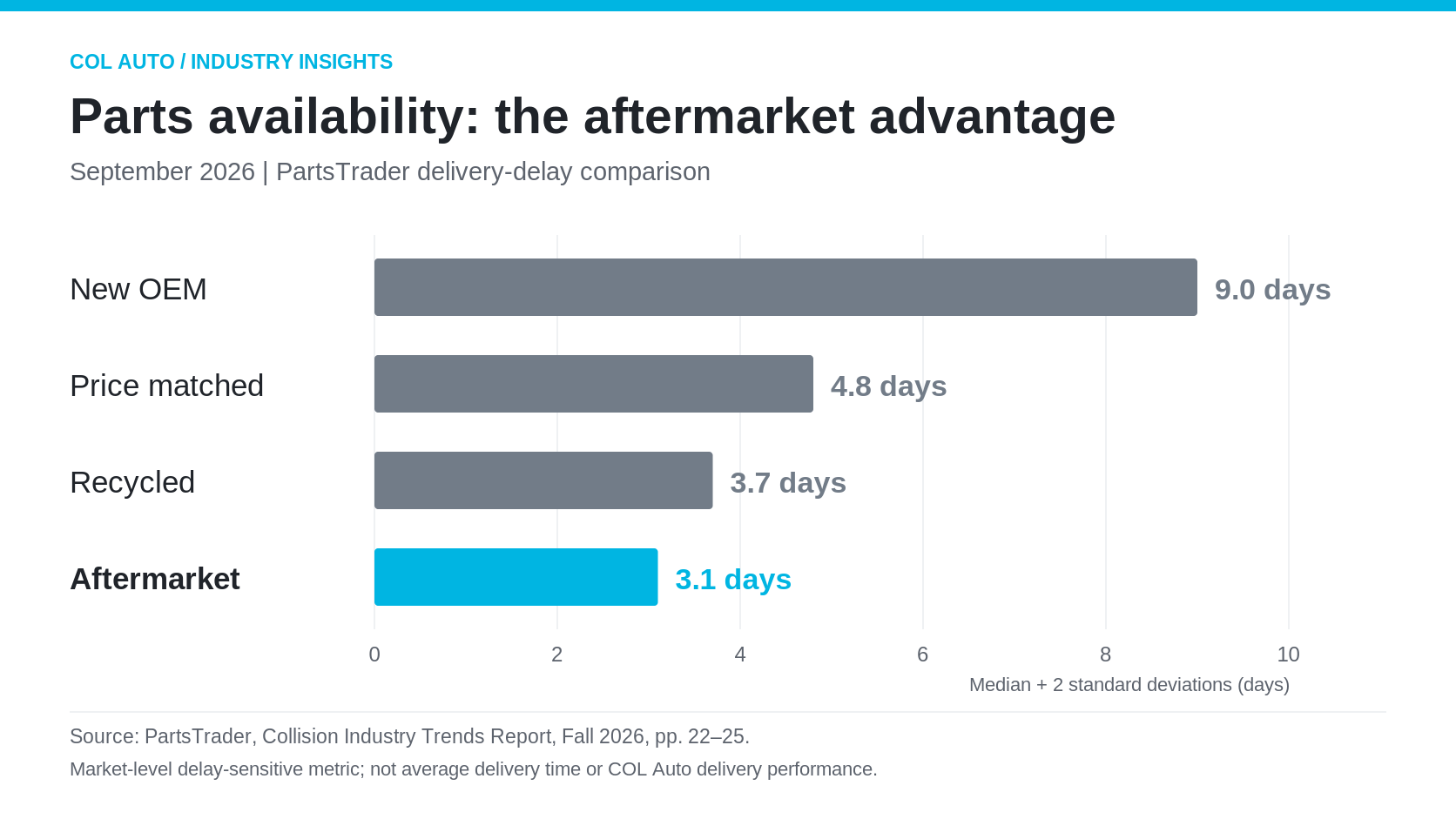
The aftermarket delivery-delay measure was approximately 66% lower than that of new OEM parts.
While these figures do not represent average delivery times or guaranteed delivery schedules, they illustrate a potential advantage that aftermarket parts can offer collision repair professionals: reduced exposure to extended parts delays.
The Aftermarket Advantage Goes Beyond Price
Aftermarket collision replacement parts have traditionally been associated with affordability. However, the latest industry data reinforces that their value can extend beyond purchase price.
PartsTrader notes that aftermarket distributors can concentrate their inventories around a smaller range of commonly needed replacement components, allowing them to maintain greater quantities of frequently purchased parts.
That inventory strategy can offer a meaningful advantage when collision repair shops need bumper covers, fenders, hoods, lighting assemblies and other commonly replaced components.
At the same time, the PartsTrader Collision Parts Price Index shows that aftermarket pricing has remained comparatively stable since early 2024, while new OEM parts have experienced greater inflationary pressure.
Together, competitive pricing and parts availability can help collision repair businesses manage costs while keeping production moving.
Of course, every repair is different. Part selection must always account for vehicle-specific repair procedures, applicable certification requirements, insurer guidelines and the shop's commitment to a proper repair.
When aftermarket components are appropriate for the job, they offer another valuable sourcing option.
Smarter Sourcing. Stronger Operations.
In today's collision repair environment, effective parts purchasing requires looking beyond the lowest quoted price.
Before placing an order, collision repair professionals should consider:
- Is the part currently in stock?
- When can it realistically be delivered?
- Does it meet the requirements of the repair?
- Can the supplier provide fitment and application support?
- Are the smaller brackets, hinges and related components also available?
- What happens to the production schedule if this part is delayed?
Working with a knowledgeable, dependable parts supplier can help shops make more informed purchasing decisions, identify potential delays earlier and better coordinate their repair schedules.
It's not just about buying parts. It's about keeping the entire repair process moving forward.
Keeping Repairs Moving With COL Auto
At Collision Auto Parts, we understand that our customers depend on more than competitive pricing.
They depend on availability, dependable service, product knowledge and a distribution partner who understands the demands of the collision repair business.
With distribution facilities across California and New Mexico, COL Auto supplies a broad selection of certified and non-certified aftermarket collision replacement parts, including bumper covers, fenders, hoods, lighting assemblies, cooling components, hood hinges and related hardware.
Our regional distribution network, established supplier relationships and dedicated customer service teams are focused on helping collision repair professionals source the parts they need.
Because we know that every part plays a role in the repair process — no matter how large or small.
The COL Auto Advantage
The right part. At the right price. At the right time.
Contact your regional COL Auto team today to discuss your collision replacement parts needs.
Explore Our ProductsSource: PartsTrader, Collision Industry Trends Report, Volume Three, Edition Two, Fall 2026, pp. 18–25. Charts are original visualizations of the published data. Industry delivery figures represent the median plus two standard deviations, not average delivery times or COL Auto performance.
View the full PartsTrader Collision Industry Trends Report (Fall 2026) .