

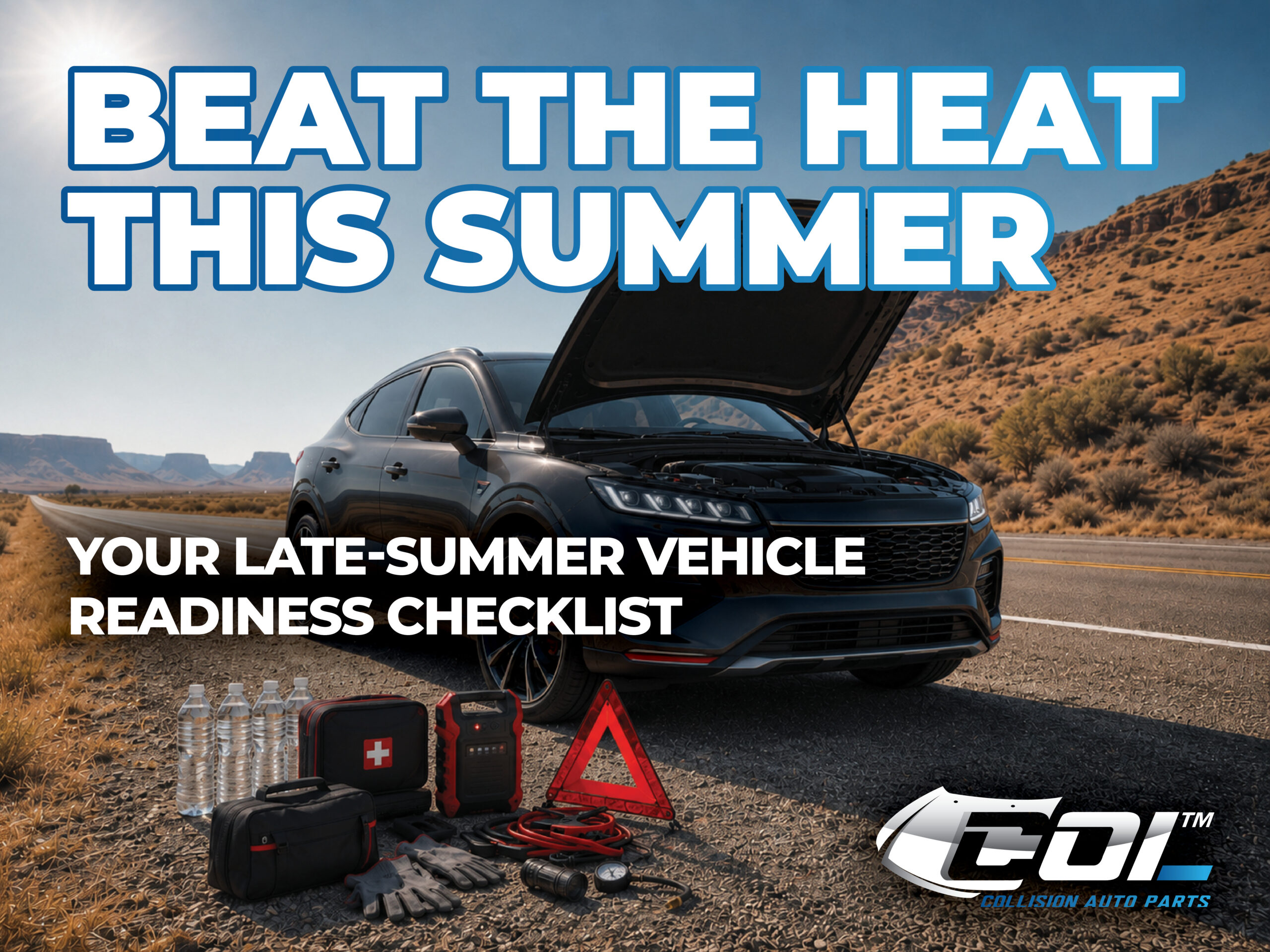
Summer heat can be hard on more than just drivers. High temperatures place added stress on batteries, tires, cooling systems, belts, hoses and other important vehicle components.
Before your next road trip—or the next major heat wave—take a few minutes to give your vehicle a basic check.
1. Check the Cooling System
Your vehicle’s cooling system works harder when temperatures climb.
With the engine completely cool:
- Check the coolant level.
- Look underneath the vehicle for leaks.
- Inspect accessible hoses for cracks, bulges or wet areas.
- Watch the temperature gauge while driving.
Never remove the radiator cap while the engine is hot. If the vehicle is running warmer than normal, losing coolant or producing steam, have it inspected immediately.
The radiator, A/C condenser, cooling fans and related components are located near the front of many vehicles. If your vehicle recently struck an animal, curb or road debris—or was involved in a front-end collision—hidden damage could restrict airflow or cause a leak.
2. Inspect Your Tires
Hot pavement, long highway drives and improper tire pressure can be a dangerous combination.
Check all four tires when they are cold and inflate them according to the pressure listed inside the driver’s door or in the owner’s manual—not the maximum pressure printed on the tire.
Look for:
- Low or uneven tread
- Cracks, cuts or punctures
- Sidewall bulges
- Embedded nails or debris
- Uneven wear
Do not forget the spare tire. Make sure the jack, lug wrench and any necessary wheel-lock key are also inside the vehicle.
3. Test the Battery and Inspect Belts, Hoses and Fluids
Summer heat can shorten battery life and expose an already weakened battery. Slow starting, dim lights or corrosion around the terminals may be signs that testing is needed.
With the engine off and cool, also inspect visible belts and hoses. Watch for fraying, cracking, bulging, brittleness or leaking connections.
Check the vehicle’s essential fluids, including:
- Engine oil
- Coolant
- Brake fluid
- Transmission fluid
- Power-steering fluid, when applicable
- Windshield-washer fluid
Recurring puddles, stains or unexplained fluid loss should be inspected by a qualified technician.
4. Make Sure You Can Stay Cool—and See Clearly
Test the air conditioning before leaving on a long drive. Weak airflow, unusual noises, unpleasant odors or air that never becomes cold may indicate a problem.
A clogged cabin air filter can also reduce airflow and make the A/C system work harder.
While you are checking the vehicle, test the:
- Headlights
- Brake lights
- Turn signals
- Emergency flashers
- Backup lights
- Windshield wipers
Clean the windshield, mirrors, headlights and backup camera before hitting the road.
5. Pack a Basic Roadside Kit
Even a well-maintained vehicle can experience an unexpected problem. Keep a basic emergency kit in the vehicle with:
- Drinking water
- Cell phone charger or power bank
- First-aid kit
- Flashlight
- Jumper cables or jump pack
- Tire-pressure gauge
- Reflective warning triangles
- Work gloves
- Basic tools
- Nonperishable snacks
- Necessary medications
Before traveling through remote desert or mountain areas, check the weather and road conditions and let someone know your expected route.
Never Leave Children or Pets in a Parked Vehicle
A parked vehicle can become dangerously hot very quickly—even when the outdoor temperature feels moderate or a window is partially open.
Always check the back seat before leaving, lock unattended vehicles and keep keys away from children. During road trips, schedule regular breaks and make sure everyone has access to water.
A Few Minutes Now Can Prevent a Bigger Problem Later
Extreme heat does not always create a new vehicle problem. Often, it reveals an issue that was already developing.
A quick inspection can help identify a weak battery, worn tire, leaking hose or struggling cooling system before it causes a breakdown.
Download our printable Late-Summer Vehicle Readiness Checklist and keep a copy in your vehicle.
For collision repair professionals, COL Auto supplies quality certified and non-certified aftermarket collision parts for most vehicle makes and models. Our inventory includes radiators, A/C condensers, cooling fan assemblies, radiator supports, coolant tanks, bumper covers, grilles, lamps, mirrors and more.
Beat the heat. Check your ride—and enjoy the road ahead.
This article provides general vehicle-safety information. Always follow the recommendations in your owner’s manual and consult a qualified automotive or collision repair professional when inspection, diagnosis or repair is needed.