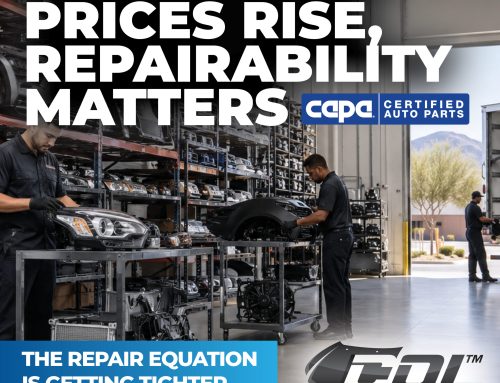



A vehicle being declared a “total loss” can sound straightforward on paper. The insurance company reviews the estimated repair cost, compares it to the vehicle’s value, and determines whether the car should be repaired or written off.
But for many drivers, the real-life impact is anything but simple.
A recent consumer research report from the Automotive Body Parts Association explored how total loss determinations affect households after a collision. What the report found is something many repair professionals, parts suppliers, and drivers already understand: when a vehicle is totaled, the cost can extend far beyond the damaged car.
For many people, a vehicle is not just transportation. It is how they get to work, take kids to school, care for family, run errands, and keep daily life moving. When that vehicle is suddenly gone, the settlement does not always put the consumer back in the same position.
The Total Loss Problem
Total loss decisions are becoming more common because several pressures are happening at the same time.
Modern vehicles are more complex than ever. Even common collision parts can now include sensors, cameras, electronics, or calibration requirements. Labor costs, parts costs, and repair complexity all contribute to a higher total cost of repair.
At the same time, a vehicle’s actual cash value may not leave much room between “repairable” and “totaled.” When repair costs rise and vehicle values narrow, more cars can cross the threshold where insurers decide the repair does not make financial sense.
That might close the claim, but it can open a much bigger problem for the consumer.
What Happens After a Vehicle Is Totaled?
According to the ABPA report, consumers who experience a total loss often face several downstream challenges, including:
New or increased debt
If the settlement is not enough to purchase a comparable replacement vehicle, many drivers are forced into a new loan, a larger monthly payment, or financing under pressure.
Loss of savings or assets
Some households have to pull from savings, retirement funds, or other emergency resources just to get back into a vehicle.
A lower-quality replacement vehicle
When the payout does not match current market prices, consumers may have to settle for an older vehicle, a higher-mileage vehicle, or something less reliable than what they lost.
Transportation disruption
Going without a vehicle can create immediate problems for work, school, appointments, caregiving, and basic household needs.
More work and income pressure
Some consumers take on extra hours, side jobs, or gig work to cover the added financial burden after a total loss.
In other words, a totaled vehicle can create a chain reaction. One collision can turn into debt, mobility problems, stress, and long-term financial strain.
Why Repair Options Matter
This is where parts availability matters.
When safe, quality, cost-effective repair options are available, more vehicles may have a better chance of staying repairable. Replacement parts are a major part of collision repair costs, and having access to competitive options can help repairers, insurers, and consumers evaluate more affordable repair pathways.
Quality aftermarket collision parts are one important part of that conversation.
At COL Auto, we support the collision repair industry by helping shops access the parts they need to complete repairs efficiently and affordably. Our inventory includes key collision part categories such as bumper covers, hoods, fenders, grilles, lamps, mirrors, radiators, condensers, and more.
For repair facilities, having reliable access to collision parts helps reduce delays, manage costs, and keep jobs moving. For consumers, those repair options may help make the difference between a vehicle being repaired or being declared a total loss.
Consumer Choice Matters
A total loss determination should not feel like the only option simply because repair costs are too high or parts options are too limited. Consumers deserve transparency, choice, and access to safe repair alternatives when those options are appropriate.
The more competitive the repair parts market is, the more flexibility the collision repair ecosystem has.
That matters for repair shops.
It matters for insurers.
Most importantly, it matters for drivers and families who depend on their vehicles every day.

What You Can Do: Help Protect Repair Choice
Rising repair costs are not just an industry issue. They affect drivers, families, repair shops, insurers, and the entire collision repair ecosystem.
That is why consumer choice matters.
The CAR Coalition is encouraging vehicle owners, repair professionals, parts suppliers, and industry supporters to contact their Members of Congress and ask them to support the REPAIR Act and SMART Act. These bills are focused on protecting consumer access to vehicle repair information, preserving competition in the repair market, and helping drivers maintain the right to choose how and where their vehicles are repaired.
When consumers have access to more repair options, the market becomes more competitive. When the market is more competitive, repairers have more flexibility. And when repairers have more flexibility, more vehicles may have a better chance of being repaired safely and affordably instead of being declared a total loss.
If you care about repair choice, affordable collision repair, and keeping consumers in control, we encourage you to visit the CAR Coalition’s “What You Can Do” section and use their template to email your Member of Congress.
Take Action: Email your Member of Congress and ask them to support the REPAIR Act and SMART Act.
COL Auto’s Role
COL Auto is proud to support collision repair professionals with broad inventory, dependable service, and access to aftermarket collision parts that help keep repairs moving.
Because when a vehicle can be repaired safely and affordably, the impact can go far beyond the repair order.
It can help a customer avoid a larger loan.
It can help a family stay mobile.
It can help someone keep getting to work.
And it can help prevent one collision from becoming a long-term financial setback.