

IS YOUR “TOTALED” VEHICLE ABOUT TO COST YOU MORE THAN YOU THINK?
A perfect storm of rising repair costs, high deductibles, and upside-down auto loans is creating a tougher reality for drivers.
Getting into an accident is stressful enough. But for more and more drivers, the real shock comes after the insurance estimate arrives.
In today’s market, vehicles are being declared a total loss more often. That means instead of repairing the vehicle, the insurance company determines that the cost to fix it is too high compared to the vehicle’s value.
At first, that might sound simple: the vehicle is totaled, insurance pays you, and you move on.
Unfortunately, for many consumers, it is not that easy.
When a Total Loss Does Not Feel Like a Fresh Start
A total loss can create a major financial headache, especially for drivers who still owe money on their vehicle loan.
Here is the problem:
Your insurance payout is generally based on the actual cash value of the vehicle, not necessarily what you still owe on the loan. If vehicle values have softened, or if you financed the vehicle with a longer-term loan, you may owe more than the vehicle is worth.
That is commonly called being upside down on your loan.
So the situation can look like this:
Total Loss + Upside-Down Loan = Buying a New Vehicle While Still Paying Off Part of the Old One
For many families, that is a tough position to be in. You may suddenly need a replacement vehicle, come up with another down payment, manage a new monthly payment, and still pay the remaining balance on a vehicle you can no longer drive.
High Deductibles Are Making Repairs Harder to Afford
Another issue facing drivers is the rise in higher insurance deductibles.
For years, a $500 deductible was common. Today, many drivers carry $1,000 deductibles or higher to help keep monthly insurance premiums down. That may save money month to month, but it can create a major obstacle after an accident.
If the repair is close to the total loss threshold, or if the damage feels minor but still requires expensive parts, sensors, scanning, or calibration, that deductible can make the decision even harder.
Some drivers delay repairs. Others avoid filing claims. And in more serious cases, the vehicle may be pushed into total loss territory because repair costs continue to rise.
Why Are More Vehicles Being Totaled?
According to industry data shared by PartsTrader, total loss frequency continued to rise in 2025, pushing the industry above 22%, with many carriers reporting rates approaching 30%.
Several factors are contributing to this trend:
1. Parts Cost More Than They Used To
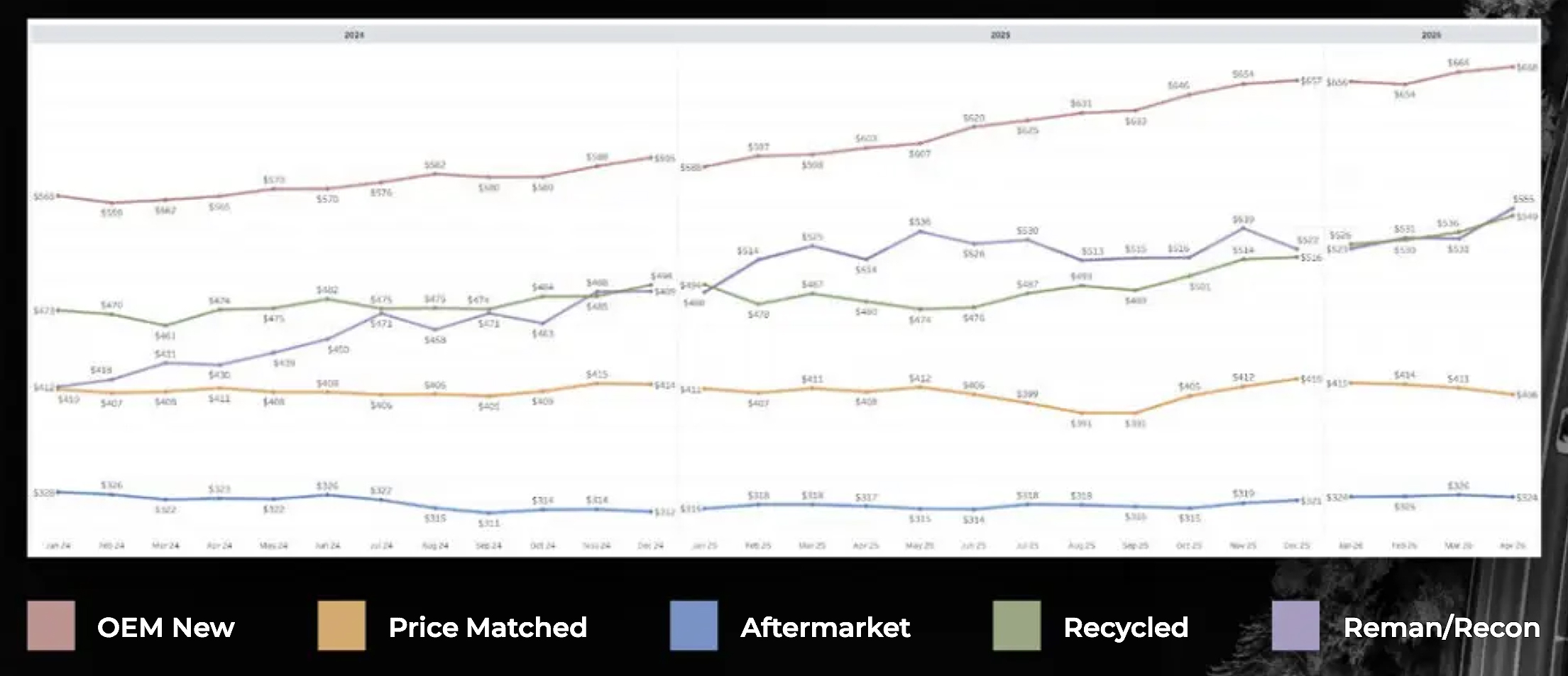
Collision parts prices have increased across multiple categories, including OEM, recycled, aftermarket, remanufactured, and price-matched parts. Even when repairers work hard to source the best available option, the overall cost of parts has continued to climb.
2. Newer Vehicles Are More Complex
Modern vehicles are loaded with sensors, cameras, electronics, safety systems, and advanced driver-assistance technology. After a collision, repairs often involve more than replacing a bumper or fender.
Many vehicles now require scanning, calibration, and additional procedures to make sure safety systems work properly after the repair.
3. More Parts Are Being Replaced Per Repair
PartsTrader and Mitchell data both point to a rise in the average number of replacement parts used per repair order. More parts per job means higher repair costs, longer repair planning, and a greater chance that the repair estimate approaches the total loss threshold.
4. Used Vehicle Values Have Softened
When used vehicle values decline, it becomes easier for repair costs to exceed the vehicle’s value. That means a vehicle that may have been repairable a few years ago could now be declared a total loss under today’s market conditions.
What This Means for Drivers
For consumers, the takeaway is simple: after an accident, the financial impact can go well beyond the visible damage.
A front-end collision, side impact, or even what appears to be moderate damage can quickly become expensive once parts, labor, electronics, sensors, and calibrations are included. If your deductible is high or your loan balance is higher than your vehicle’s value, the situation can become even more stressful.
This is why it is important to understand your coverage, know your deductible, and ask questions during the claims process.
Where COL Auto Fits In
At Collision Auto Parts, we understand how important parts availability, quality, and affordability are to the collision repair process.
While drivers may not always see what happens behind the scenes, repair shops are working every day to find the right parts to help complete safe, efficient, and cost-conscious repairs. COL Auto supports collision repair professionals with access to quality aftermarket collision parts, helping shops keep repairs moving in a market where costs and complexity continue to rise.
When the industry faces a “perfect storm” of higher repair costs, increased total losses, and consumer financial pressure, having reliable parts options matters.
The Bottom Line
A totaled vehicle is not always the clean break people expect. For some drivers, it can mean paying a high deductible, shopping for a new car, and still owing money on the old one.
That is the reality many consumers are facing today.
As repair costs rise and vehicle technology becomes more complex, the collision repair industry will continue looking for ways to reduce pressure on drivers, repairers, carriers, and suppliers alike.
Collision Auto Parts is proud to be part of that solution by helping repair professionals access the parts they need to keep vehicles moving through the repair process.